From Secret Point-Breaks to Global Icon: The History of Surfing in Morocco
Long before the surf camps, the airport shuttles and the wetsuit racks, Morocco's Atlantic coast belonged to fishermen, rocky headlands and a lot of unridden swell. Today the same shoreline draws surfers from across the world, and a Moroccan surfer has competed at the Olympic Games. This is the history of surfing in Morocco: how a handful of travellers, soldiers and curious local kids turned a quiet coastline into a global surf destination, and why that story still shapes every lesson we teach in Tamraght.
The first boards: Kenitra, Mehdia and the early 1960s
Accounts of the earliest surfing in Morocco differ, which is normal for a sport that arrived informally. One widely repeated version places it in the early 1960s, when American servicemen stationed at the Kenitra base, then known as Port Lyautey, took boards to nearby Mehdia Beach. The president of the Royal Moroccan Surfing Federation has said he believes these soldiers were the first people to surf this coast.
Around the same time, European and American expatriates began riding waves in Taghazout Bay, far to the south. So surfing in Morocco in the 1960s began in at least two places at once, and neither start was led by Moroccans. The sport arrived from outside before it was adopted from within.
The hippie trail and the discovery of Taghazout
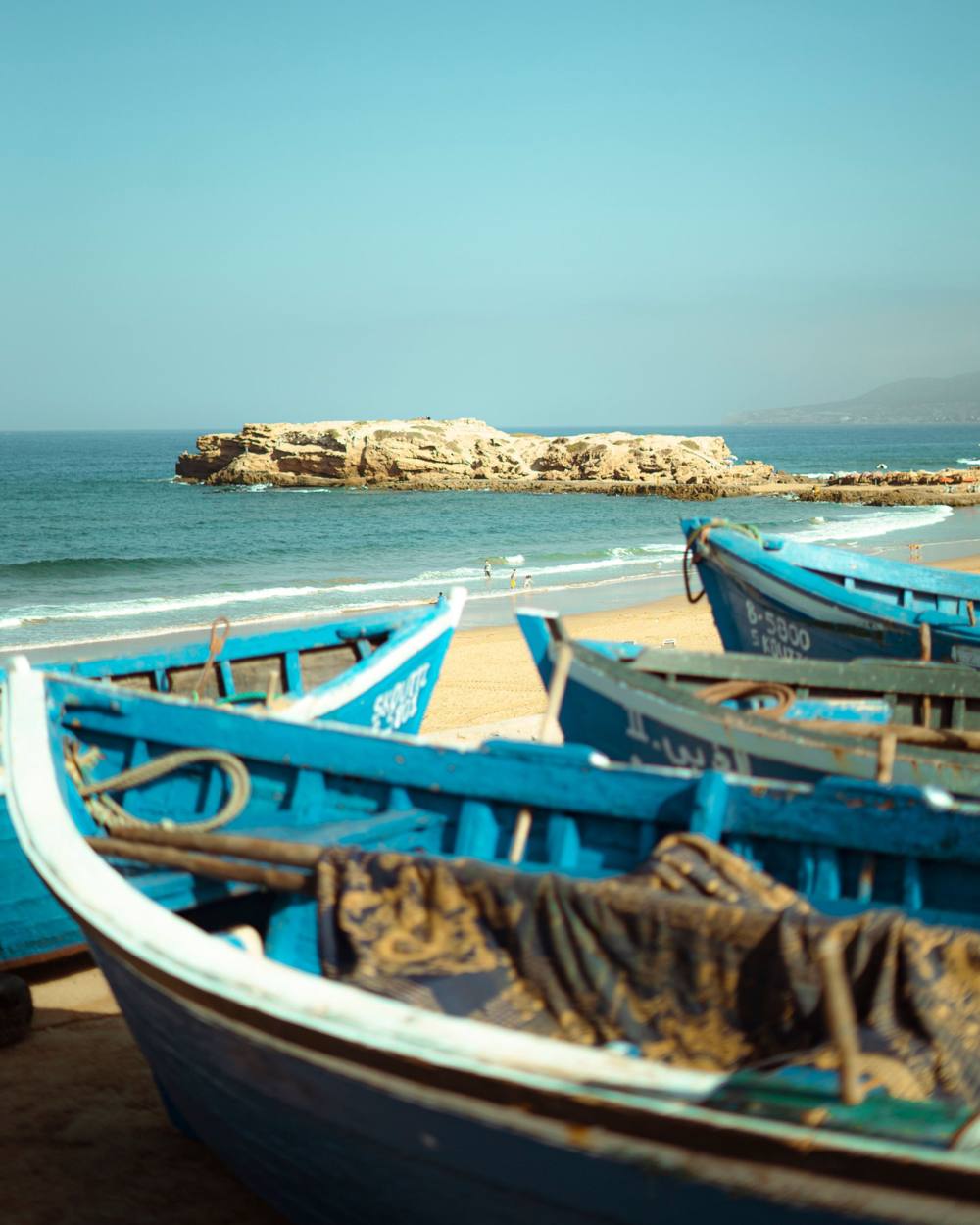
The story most surfers know begins in the late 1960s. Young travellers crossing Morocco gravitated south, and a beach near the fishing village of Taghazout became a base for people exploring the south of the country, much as Goa and Kuta did elsewhere in the world. Some of those travellers carried surfboards, and they noticed something remarkable: long right-hand point breaks peeling along rocky shelves with almost nobody on them.
By the 1970s, word was spreading. Spots such as Anchor Point, Killer Point and Boilers were attracting travelling surfers from well beyond Europe, drawn by stories of perfect points and empty lineups. Camping, bonfires and a bohemian way of life came with the territory, which is why surfing was linked with hippies and outsiders for a long time. Taghazout itself had been an Amazigh fishing village long before any of this, and that heritage is still visible on its beach.
Anchor Point and the points of Taghazout
Anchor Point became the face of Moroccan surfing, and its history is the history of Taghazout surfing in miniature. It is a powerful right-hander that peels off a rocky shelf and runs a long way down the line. In the right conditions, a ride can link with neighbouring breaks, from Anchor Point through Hash Point to the beach break at Panoramas, so a single wave feels like a journey.
North of Anchor, Killer Point breaks over reef and needs more swell to work properly, while Hash Point, between Taghazout village and Tamraght, offers another right-hander closer to town. People came for the points and many stayed for the food, the weather and the welcome.
Beyond Taghazout: Imsouane, Essaouira and the wider coast
Surf culture did not stay in one village. Imsouane, between Agadir and Essaouira, is known for a long, gentle wave in its bay and a second spot called the Cathedral, where the waves are faster and more powerful. The North Atlantic swell is strongest in the winter months, and winter is generally the high season for surf tourism across Morocco.
Essaouira, a UNESCO World Heritage city, has steady trade winds that made it a hub for windsurfing and kitesurfing as well as surfing, while nearby Sidi Kaouki is known for consistent waves. Further south, Mirleft is often described as a hidden gem with a more authentic, less crowded surf experience. Together these places turned a handful of discovery stories into a coastline-wide scene.
The pioneers of Moroccan surfing
The first generation of Moroccan surfers learned by watching, borrowing boards and paddling out beside the visitors. With them grew a local surf economy. Fahd El Mania is described as the first surfboard shaper in Morocco's history, and other craftspeople, including a boat-builder who became a shaper, turned traditional skills toward boards. That detail matters: it shows a coastline that did not just receive surf culture but began making it.
Locals also started teaching. One instructor on this stretch of coast told TelQuel that when he and friends opened a local surf school in the early 2000s, the federation's attention was still on schools in Rabat and Casablanca. By the mid-2010s, the Royal Moroccan Surfing Federation reported more than 245 surf instructors and 53 surf schools run by Moroccans. Many of the pioneers of Moroccan surfing never made headlines. They stayed in the water, shared what they knew, and made surfing a normal job for young Moroccans.
Tamraght surf culture
Tamraght sits a short drive south of Taghazout and has a character of its own: a lived-in fishing village where surf schools, cafés and fishing boats share the same few streets and beaches. Hash Point lies between Taghazout village and Tamraght, so a right-hand wave is never far away, yet the mood here is quieter and more local than at the large resort developments along the bay.
It is also where one of Morocco's best-known female surfers grew up. Maryam El Gardoum, who started surfing at 11, went on to win the women's national title five times after training on borrowed boards in a lineup that was almost entirely male. Her story reflects a wider shift: in Moroccan culture surfing has generally been seen as a masculine sport, and women who take part are quietly challenging that norm.
From local scene to global stage
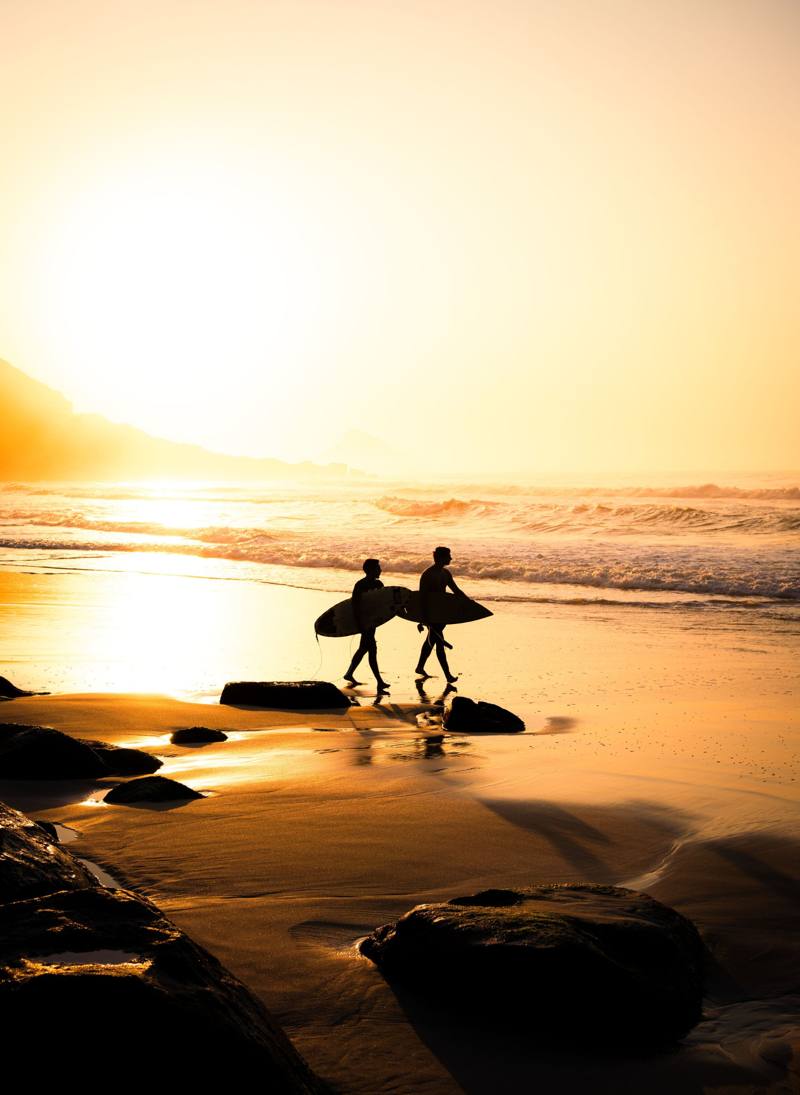
Moroccan surfing now has an international profile. In the mid-2010s the Royal Moroccan Surfing Federation, working with the World Surf League, hosted the country's first major competition, in Casablanca. Ramzi Boukhiam, born in Agadir in 1993, went on to become Morocco's first Olympic surfer, competing at Tokyo.
The coast around Taghazout has changed too. In 2001 the government's Plan Azur set out to build seaside tourism, including the Taghazout Bay development, with a stated aim of creating jobs for local people. Events such as the Taghazout Surf Expo, held near Anchor Point, now bring brands, shapers and camp owners together; TelQuel reported 39,000 visitors at its fourth edition in 2025. Growth brings questions, and many in the local surf community are trying to balance more visitors and more business with keeping the identity of the places that made surfing here special.
What this history means for your surf trip
Knowing this story changes how you surf here. Every lineup in Taghazout and Tamraght has local surfers who learned these waves long before the surf-trip boom, so a little respect goes a long way: say hello, wait your turn, and learn how a break works before you paddle for its best waves. Tide and swell decide which spot is right each day, from forgiving beach breaks for first-timers to the long points that made Morocco famous. You can read more about the coast around Tamraght or the most common questions about surf lessons.
Simo grew up on Morocco's northern coast, started coaching at 17, and now teaches from Tamraght. His lessons follow the same logic as this history: read the conditions, pick the right break, and learn in the water. If you would like to surf where this story happened, message him with your level and dates.
Book on WhatsApp See lessons & guidingFurther reading
- Surfing in Morocco (Wikipedia)
- Morocco's New Wave (Aramco World)
- Entre vagues et business, le surf marocain en pleine mutation (TelQuel, in French)
- Surf. Maroc, l'esprit de la glisse (TelQuel, in French)
- Taghazout (Wikipedia)
This article draws on the published sources above. Dates for the very first surfing in Morocco vary between accounts, so we have described them as accounts rather than settled facts.